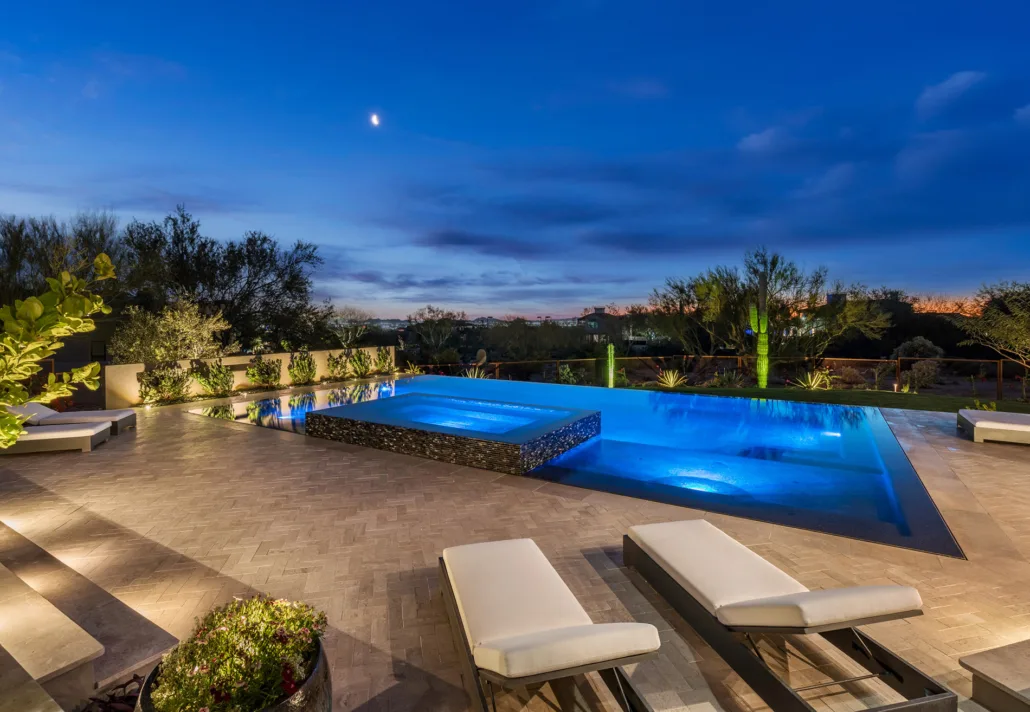
With the state’s scorching summers and sunny weather, a pool offers a refreshing oasis right in your backyard. However, understanding the costs involved in building a custom pool is crucial to making informed decisions. These factors can vary widely based on location-specific considerations, pool size and shape, materials used, design features, customizations, and labor and installation costs.
Materials like concrete are often preferred for their durability and resistance to cracking under high temperatures. However, these materials can be more expensive than others.</span> - Efficient Cooling Systems:<span style="font-weight: 400;"> To maintain a comfortable water temperature, efficient cooling systems are often required.
In Arizona, this can include:</span> - Permits:<span style="font-weight: 400;"> Obtaining the necessary permits is essential and can incur fees. However, they are more complex to construct.</span> - Increased Costs:<span style="font-weight: 400;"> The complexity of custom shapes often requires more labor and specialized materials, increasing both construction time and costs.
Additionally, irregular shapes may need custom covers and accessories, further adding to expenses.
Materials Used <span style="font-weight: 400;">The choice of materials significantly affects the cost, durability. maintenance of your pool.</span
Concrete Pools - Durability and Customization:<span style="font-weight: 400;"> Concrete pools are highly durable and can be customized to any shape or size. This reduces labor costs and shortens construction time.</span> - Cost Efficiency:<span style="font-weight: 400;"> Although they are generally less expensive than concrete pools, fiberglass pools offer fewer customization options. Their smooth surface is also less prone to algae growth, reducing maintenance costs.</span
Vinyl Pools - Budget-Friendly:<span style="font-weight: 400;"> Vinyl pools are the most budget-friendly option. bubblers add a visual appeal and create a soothing environment. Landscaping, including plants, trees, and decorative elements, can create a beautiful backyard oasis.</span> - Additional Costs:<span style="font-weight: 400;"> These enhancements require additional materials and labor, contributing to the overall cost. They can also handle complex designs and custom features.</span> - Higher Costs:<span style="font-weight: 400;"> services come at a premium. The costs include labor, equipment. overhead expenses but confirm a hassle-free construction process and high-quality results.</span
DIY Options - Cost Savings:<span style="font-weight: 400;"> Taking a DIY approach can save on labor costs. However, it requires a significant investment of time, effort. On average, a basic custom pool can range from $30,000 to $70,000. Proper budgeting for these ongoing costs is crucial to avoid unexpected financial burdens and to keep your pool in optimal condition. | Luxury Custom Pool Builders in Scottsdale | Sonoran Waters"
Maintenance and Upkeep <span style="font-weight: 400;">Regular maintenance and upkeep are essential to keep your pool clean, safe. These tasks can be performed either by services or through DIY efforts. This service typically includes skimming debris, vacuuming the pool floor, brushing the walls, and cleaning the filters. This process includes draining some water, adding winter chemicals, and securely covering the pool. The cost for closing services is similar to opening, ranging from $150 to $300.</span
Operational Costs <span style="font-weight: 400;">Operating a pool involves regular expenses related to water usage, electricity. These costs can fluctuate based on the size of the pool, frequency of use. the type of equipment installed.</span
Water and Electricity - Monthly Utility Bills:<span style="font-weight: 400;"> Running a pool can increase your monthly utility bills by $50 to $150. This includes the cost of pumping and filtering water, heating the pool if a heater is installed, and operating any additional features like lighting or water jets. Energy-efficient equipment can help reduce these costs over time.</span
Pool Chemicals - Chemical Balance:<span style="font-weight: 400;"> Maintaining the proper chemical balance is vital for water clarity, hygiene. On average, you can expect to spend $50 to $100 monthly on pool chemicals, including chlorine, pH balancers, algaecides, and other necessary treatments. Replacing damaged tiles is important to maintain the pool’s appearance and prevent further structural issues. Common upgrades include installing new lighting, adding water features, resurfacing the pool, or updating the decking. Renovation costs can vary widely, typically ranging from $10,000 to $20,000. Read online reviews, ask for referrals from friends or family, and check out the builder’s portfolio of completed projects. Positive reviews and visually appealing portfolios are good indicators of reliability and quality work.</span> - Check Credentials:<span style="font-weight: 400;"> confirm the builder is licensed and insured. Licensing confirms that the builder meets industry standards and regulations. insurance protects you from potential liabilities during the construction process.</span
Requesting Quotes and Estimates - Detailed Quotes:<span style="font-weight: 400;"> Obtain detailed, itemized quotes from potential builders. A complete quote should outline all costs involved, including materials, labor, permits, and any additional features or customizations. This transparency helps you understand where your money is going and prevents unexpected expenses.</span> - Compare Multiple Quotes:<span style="font-weight: 400;"> Don’t settle for the first quote you receive. Look for a balance between cost, quality, and the builder’s reputation. it’s essential to understand the costs involved. By considering factors like pool size, materials, and design features, you can better estimate your budget. Additionally, long-term costs for maintenance and operation should be factored into your decision.